
Risks of lead to humans
Lead is highly toxic and serves no beneficial function in living organisms. Globally, lead exposure is a significant health concern for the environment and people. Lead has also increasingly been identified as a threat to wildlife.
Because lead interferes with the absorption and functioning of essential nutrients such as calcium and zinc, it can negatively impact a variety of organs and physiological processes [1].
How humans are exposed to lead
While various sources of lead exist in the environment, such as paint and fuel, which are now regulated in most countries, including South Africa, historical use of lead paint remains a cause for concern.
People can also be exposed to significant quantities of lead through unregulated activities. These include melting fishing sinkers, casting lead bullets, using poorly managed shooting ranges, and reloading ammunition. An emerging concern is the leaching of lead into food from cooking pots made from scrap metal [5]. Lead has also been discovered in the decorative pigments and glazes applied to some commercial ceramicware [6].
In South Africa, where eating game meat is popular, the risks of lead exposure through consuming meat shot with lead ammunition is high.
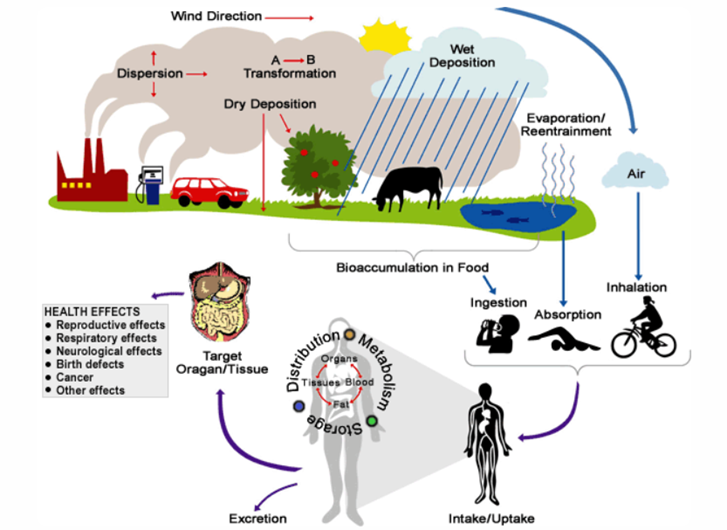
Key studies on lead exposure in humans
- Dust and Soil: Historically, children living near busy roads swallowed lead dust, which raised their blood lead levels [8].
- Mining Towns: Children in the lead-mining town of Aggeneys have much higher lead levels than those in non-mining towns [9].
- Eating Game Meat: Hunters and their families who eat game shot with lead bullets show higher blood lead levels worldwide [10, 11, 12, 13, 14].
- Making Fishing Sinkers: Children in fishing towns where lead sinkers are melted often breathe in toxic fumes, raising their lead levels [15].
- Shooting Ranges: Regular shooters at ranges have significantly higher lead levels than archers [16].
Impacts of lead exposure
- At low levels, the symptoms of lead poisoning can be non-specific. These may include headaches, abdominal pain, weakness or pain in muscles and joints, tiredness, tingling in the hands and feet, and irritability.
- Higher lead levels are associated with reductions in IQ scores, learning difficulties, hearing loss, concentration issues, and higher school failure rates [17]. Lead exposure is also linked to infertility [18], weight loss, reduced haemoglobin levels, kidney damage [19], hypertension, and cardiovascular disease [20]. Furthermore, evidence links lead exposure to aggressive or violent behaviour [21].
- At extremely high levels, lead can cause permanent muscular paralysis, seizures, coma, and ultimately death [22].
Risks of eating game meat shot with lead ammunition
Lead bullets shatter on impact, leaving thousands of tiny fragments in the meat. These particles can spread up to 340 mm from the wound and are too small to see or wash away. Studies show that 100% of game meat samples from South African wildlife tested above European safety limits for lead.
There is no safe level of lead in the blood. Children can suffer permanent brain damage and learning problems. Adults risk high blood pressure, kidney damage, and heart disease. Even cooking does not make lead safe. Farm workers and skinners who handle the heads and offal (the most contaminated parts) are also at high risk.
Normal meat inspection cannot fix this problem because cutting away all the contaminated meat is too expensive. Until hunters switch entirely to lead-free bullets, eating game meat remains a serious health risk.
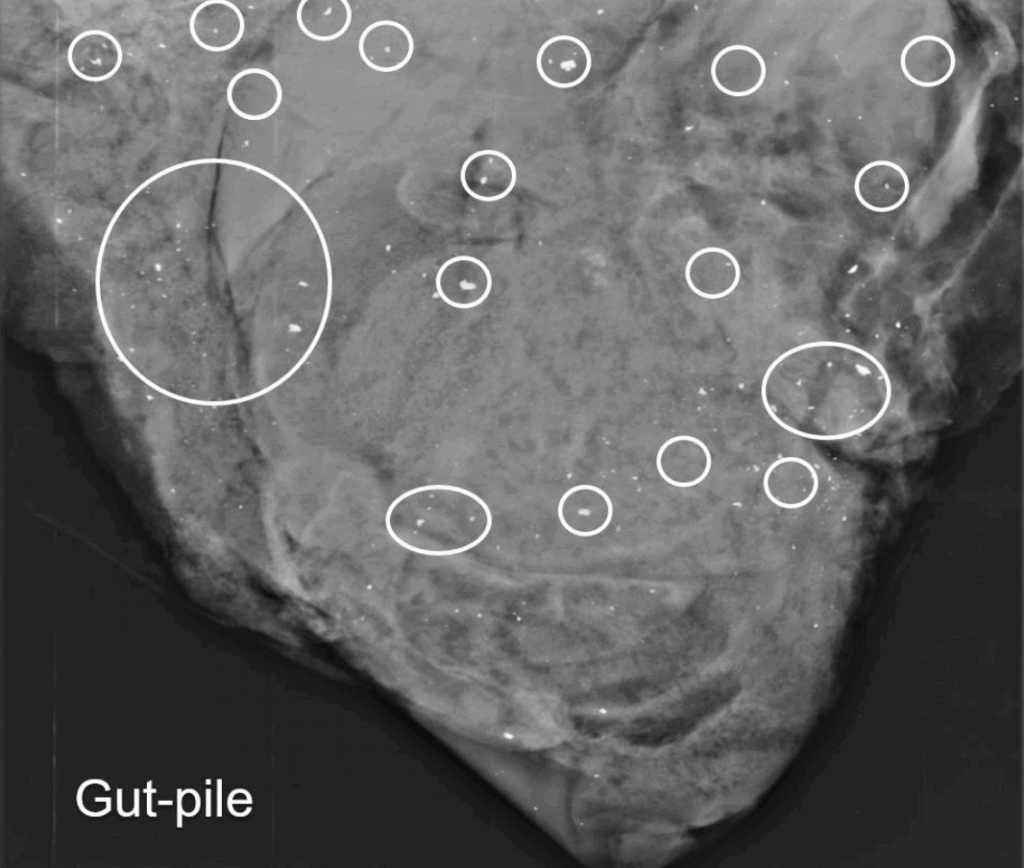
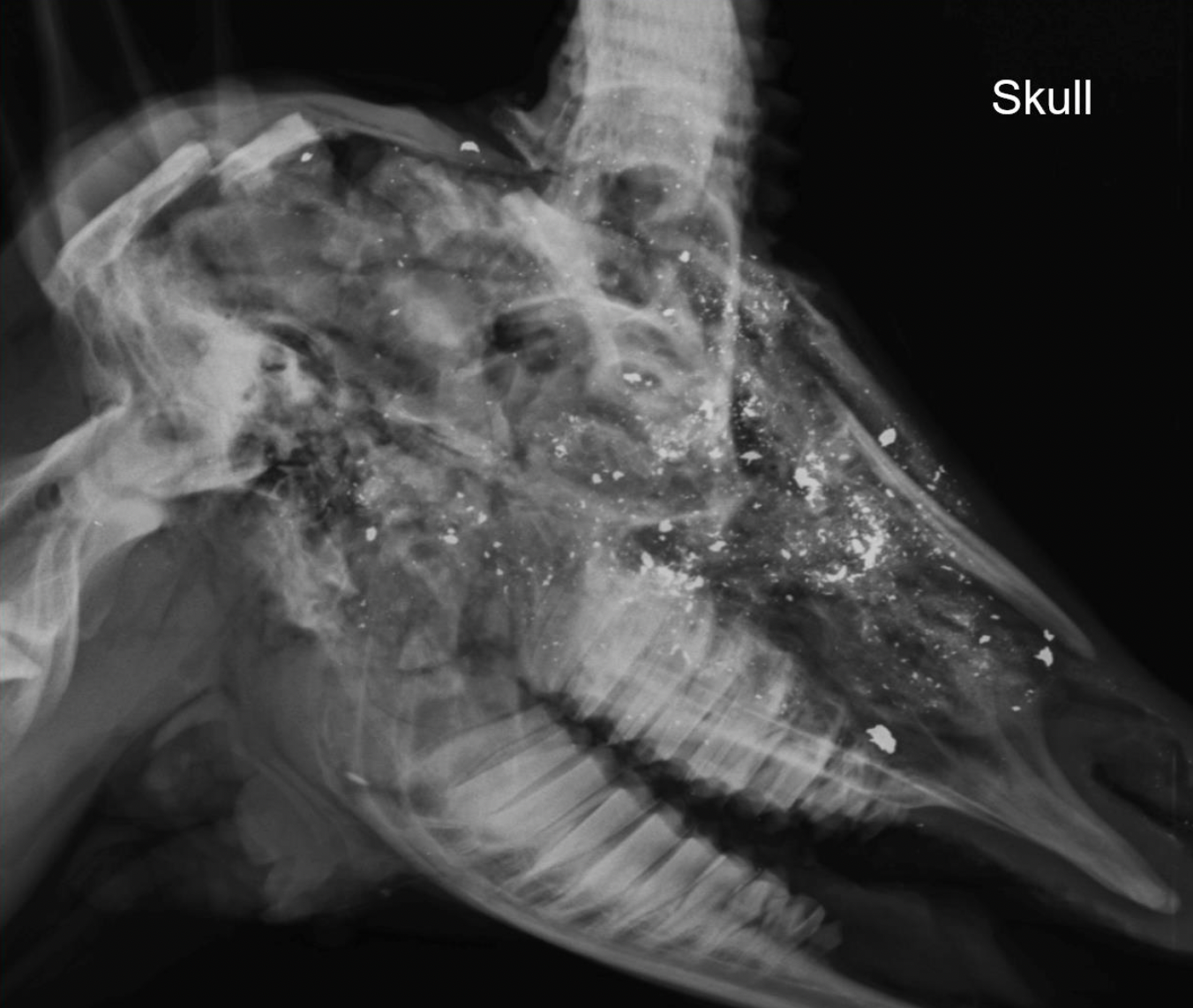
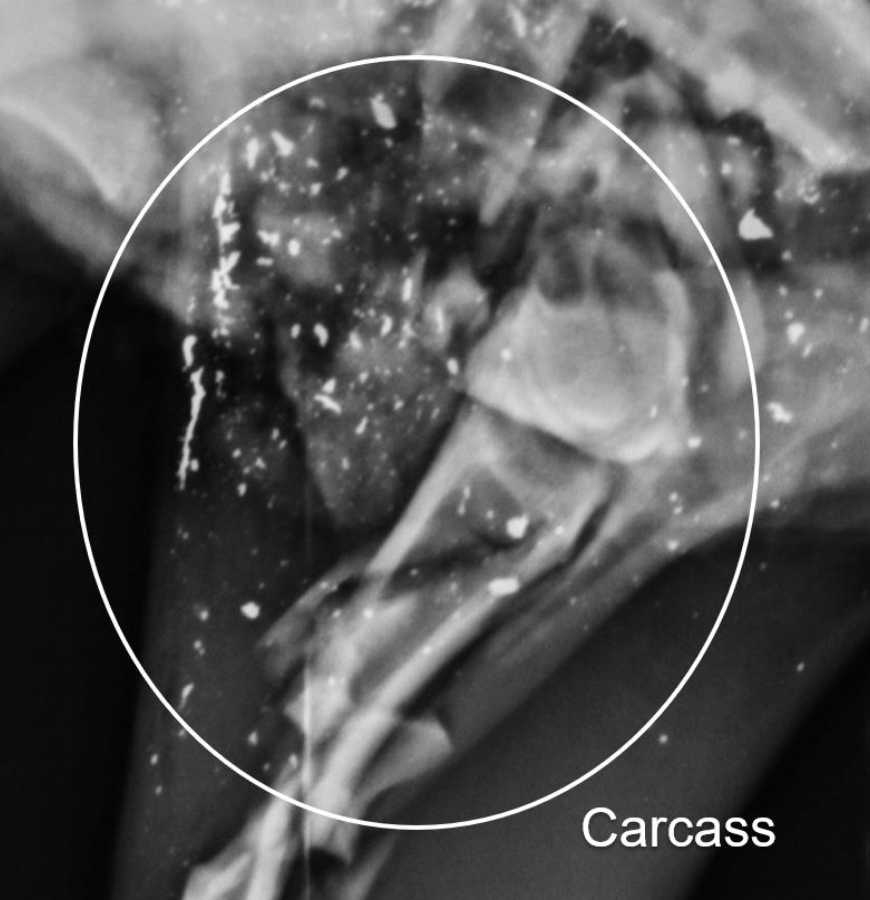
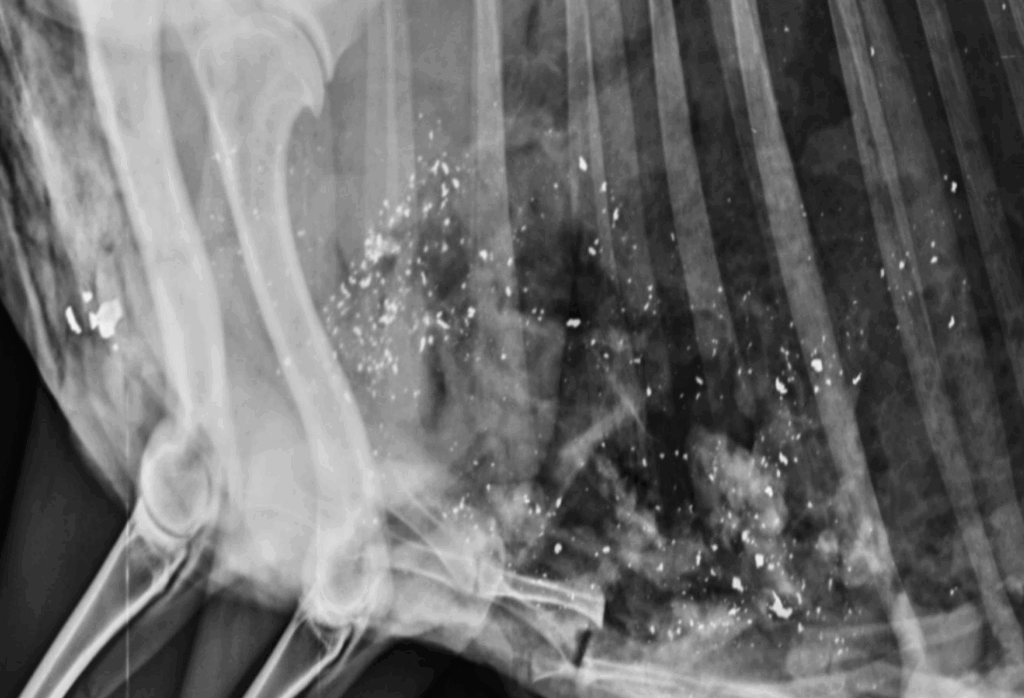
Each white spot on these x-rays is a lead fragment deposited in a Springbok shot with a .243 calibre lead core bullet (Acknowledgement: CHASA and NATSHOOT).
[1] Mason, L.H., Harp, J.P., Han, D.Y., 2014. Pb neurotoxicity : neuropsychological effects of Lead toxicity. Biomed. Res. Int. 2014.
[2] Agency for Toxic Substances and Disease Registry (ATSDR). Lead (Pb) Toxicity: What is the Biological Fate of Lead in the Body? Environmental Medicine. https://archive.cdc.gov/www_atsdr_cdc_gov/csem/leadtoxicity/biologic_fate.html
[3] Franson, J.C., Pain, D.J., 2011. Lead in birds. In: Beyer, W.N., Meador, J.P. (Eds.), Environmental Contaminants in Biota: Interpreting Tissue Concentrations. CRC Press, Boca Raton, pp. 563–594.
[4] World Health Organization. Lead poisoning and health. Fact sheet. September 27, 2024. https://www.who.int/news-room/fact-sheets/detail/lead-poisoning-and-health
[5] Mathee A, Street R. Recycled aluminium cooking pots: a growing public health concern in poorly resourced countries. BMC Public Health. 2020 Sep 16;20(1):1411.
[6] Mathee A, Renton L, Street R. Concentrations of lead in ceramic tableware in South Africa. South African Journal of Science. 2023 Oct 17;119(9-10).
[7] Parithathvi A, Choudhari N, Dsouza HS. Prenatal and early life lead exposure induced neurotoxicity. Human & Experimental Toxicology. 2024 Sep 10;43:09603271241285523.
[8] Mathee A, Röllin H, von Schirnding Y, Levin J, Naik I. Reductions in blood lead levels among school children following the introduction of unleaded petrol in South Africa. Environ Res. 2006 Mar;100(3):319-22. doi: 10.1016/j.envres.2005.08.001. Epub 2005 Oct 6. PMID: 16213479.
[9] Schirnding Y, Mathee A, Kibel M, Robertson P, Strauss N, Blignaut R. A study of pediatric blood lead levels in a lead mining area in South Africa. Environ Res. 2003 Nov;93(3):259-63. doi: 10.1016/s0013-9351(03)00117-8. PMID: 14615235.
[10] Johansen P, Pedersen HS, Asmund G, Riget F. Lead shot from hunting as a source of lead in human blood. Environ Pollut. 2006 Jul;142(1):93-7. doi: 10.1016/j.envpol.2005.09.015. Epub 2005 Nov 8. PMID: 16280190.
[11] Risk of lead exposure from wild game consumption from cross-sectional studies in Madre de Dios, Peru. Berky, A.J., et al. The Lancet Regional Health – Americas. 2022
[12] Hunting with lead: Association between blood lead levels and wild game consumption. Iqbal, S., et al. Environmental Research. 2009;
[13] Thomas, V. G., Pain, D. J., Kanstrup, N. and Cromie, R. (2022). Increasing the Awareness of Health Risks from Lead-Contaminated Game Meat Among International and National Human Health Organizations. European Journal of Environment and Public Health, 6(2), em0110. https://doi.org/10.21601/ejeph/12043
[14] Wepler M, Schreckenberg J, Paul B, Fröba G, Muth CM. Influence of Ingestion of Game Meat on Blood Concentration of Lead in Southern Germany: A Pilot Study. Bull Environ Contam Toxicol. 2022 Dec 22;110(1):21. doi: 10.1007/s00128-022-03661-w. PMID: 36547713; PMCID: PMC9780142.
[15] Mathee A, Khan T, Naicker N, Kootbodien T, Naidoo S, Becker P. Lead exposure in young school children in South African subsistence fishing communities. Environ Res. 2013 Oct;126:179-83. doi: 10.1016/j.envres.2013.05.009. Epub 2013 Jul 6. PMID: 23838130.
[16] Mathee, A., de Jager, P., Naidoo, S. and Naicker, N., 2017. Exposure to lead in South African shooting ranges. Environmental research, 153, pp.93-98.
[17] Hou, S., Yuan, L., Jin, P., Ding, B., Qin, N., Li, L., Liu, X., Wu, Z., Zhao, G., & Deng, Y. (2013). A clinical study of the effects of lead poisoning on the intelligence and neurobehavioral abilities of children. Theoretical Biology and Medical Modelling, 10, 1–9.
[18] Infertility: Lee, S., Min, J.-y., & Min, K.-b. (2020). Female infertility associated with blood lead and cadmium levels. International Journal of Environmental Research and Public Health, 17(5), 1794.
[19] Orr, S. E., & Bridges, C. C. (2017). Chronic kidney disease and exposure to nephrotoxic metals. International journal of molecular sciences, 18(5), 1039
[20] (Cook, M. K., Zhang, J., & Wei, Y. (2022). Blood lead levels and risk of deaths from cardiovascular disease. The American Journal of Cardiology, 173, 132–138.)
[21] Obamuyide, H., Blose, N., Kredo, T. & Matzopoulos, R. (2025). Early life lead exposure as a risk factor for aggressive and violent behaviour in young adults: A systematic review. Aggression and Violent Behavior. DOI: 10.1016/j.avb.2025.102090[22] Wani AL, Ara A, Usmani JA. Lead Encephalopathy. [Updated 2022 Sep 26]. In: StatPearls [Internet]. Treasure Island (FL): StatPearls Publishing; 2022. Available from: https://www.ncbi.nlm.nih.gov/books/NBK563167/